Tag: cataract

When would one operate cataract in Africa?

There is a good retrospective study from Nigeria showing that trends to operate only the advanced stages of cataract persist in Sub-Saharan Africa. That means that a patient with cataract would typically get his cataract removed only when they are blind (i.e. 0,05 or 3/60 and beliw, HM, LP etc.). In this context it is important to remember, that MSICS technique of cataract surgery is safer in premature and matute stages of cataract, which can influence the willingness to operate among surgeons.

Ther Adv Ophthalmol. 2019 Jan-Dec; 11: 2515841419886451.
Published online 2019 Nov 13. doi: 10.1177/2515841419886451
PMCID: PMC6854760
PMID: 31763621
Preoperative visual acuity of cataract patients at a tertiary hospital in sub-Saharan Africa: a 10-year review
Mary O. Ugalahi, Obioma C. Uchendu, and Linda O. Ugalahi
Mary O. Ugalahi, Department of Ophthalmology, College of Medicine, University of Ibadan and University College Hospital, Ibadan, Ibadan, Nigeria; Department of Ophthalmology, College of Medicine, University of Ibadan and University College Hospital, 200212 Ibadan, Ibadan, Nigeria;

Purpose:

To determine the preoperative visual acuity of cataract patients over a 10-year period in a tertiary facility as a means of auditing the cataract surgical services.

Methods:

A retrospective study of patients with age-related cataracts who had cataract surgery performed between January 2007 and December 2016 at the University College Hospital, Ibadan. Systematic random sampling and probability proportionate to size were used to recruit a representative sample. Information on sociodemographic characteristics, preoperative visual acuity, ocular and systemic comorbidities were retrieved and analysed.

Results:

Of the 499 patients studied, males were 268 (53.7%) and their mean age was 67.69 (±9.51) years. The predominant visual acuity was hand motion 184 (36.9%) and yearly mean preoperative visual acuity was in the range of 0.0037–0.04 decimal.

Conclusion:

The mean preoperative visual acuity of patients in this facility did not change over the 10-year study period. Mean value of preoperative visual acuity remained within the range of blindness and did not improve over the decade. This could either be a reflection of visual impairment at which our patients seek care or an indication of the range of visual acuities at which surgeons are willing to offer cataract surgery in our environment. This trend has negative implications on the burden of cataract blindness as it reflects poor coverage of surgery for other levels of visual impairment due to cataract.

Morgagnian cataract

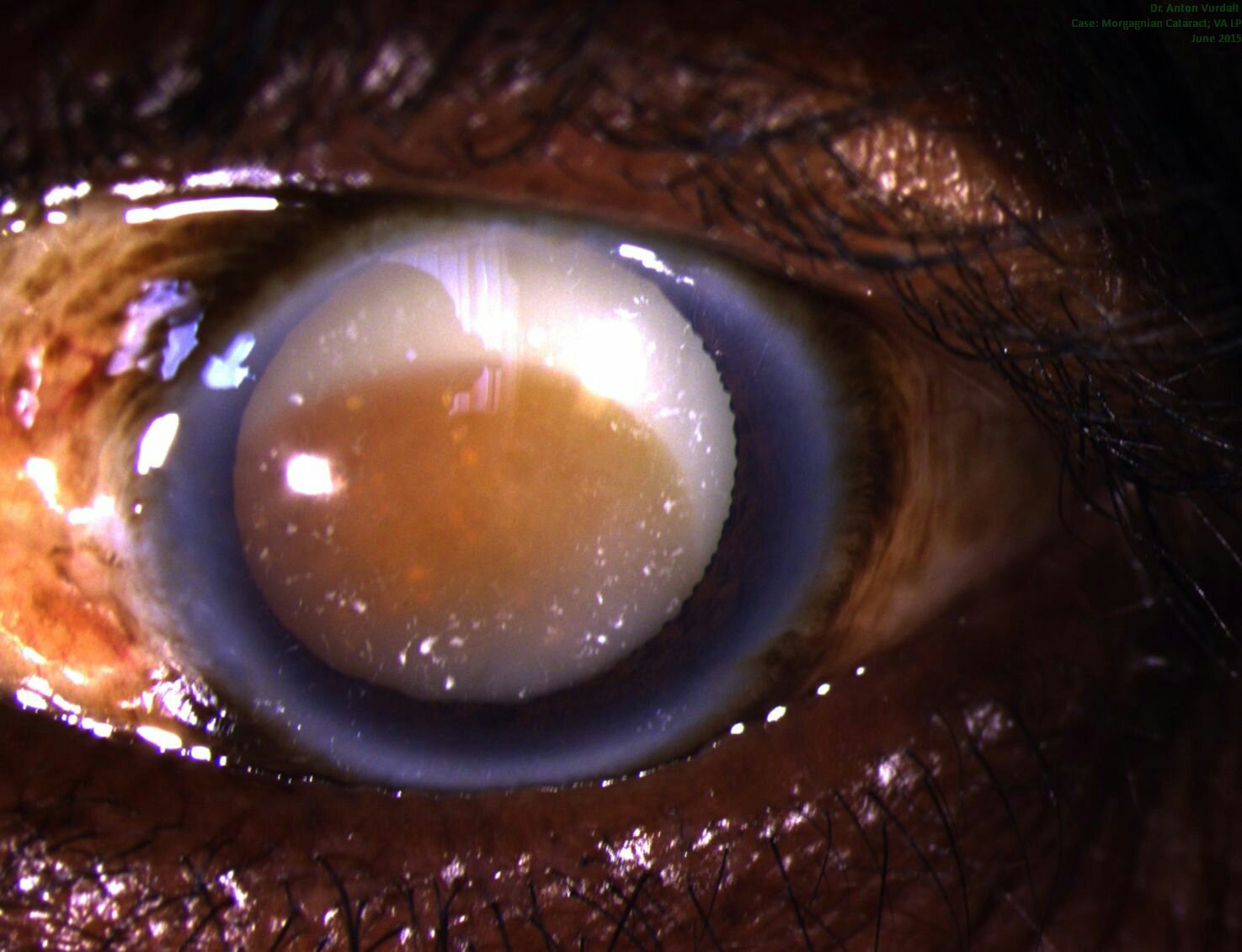
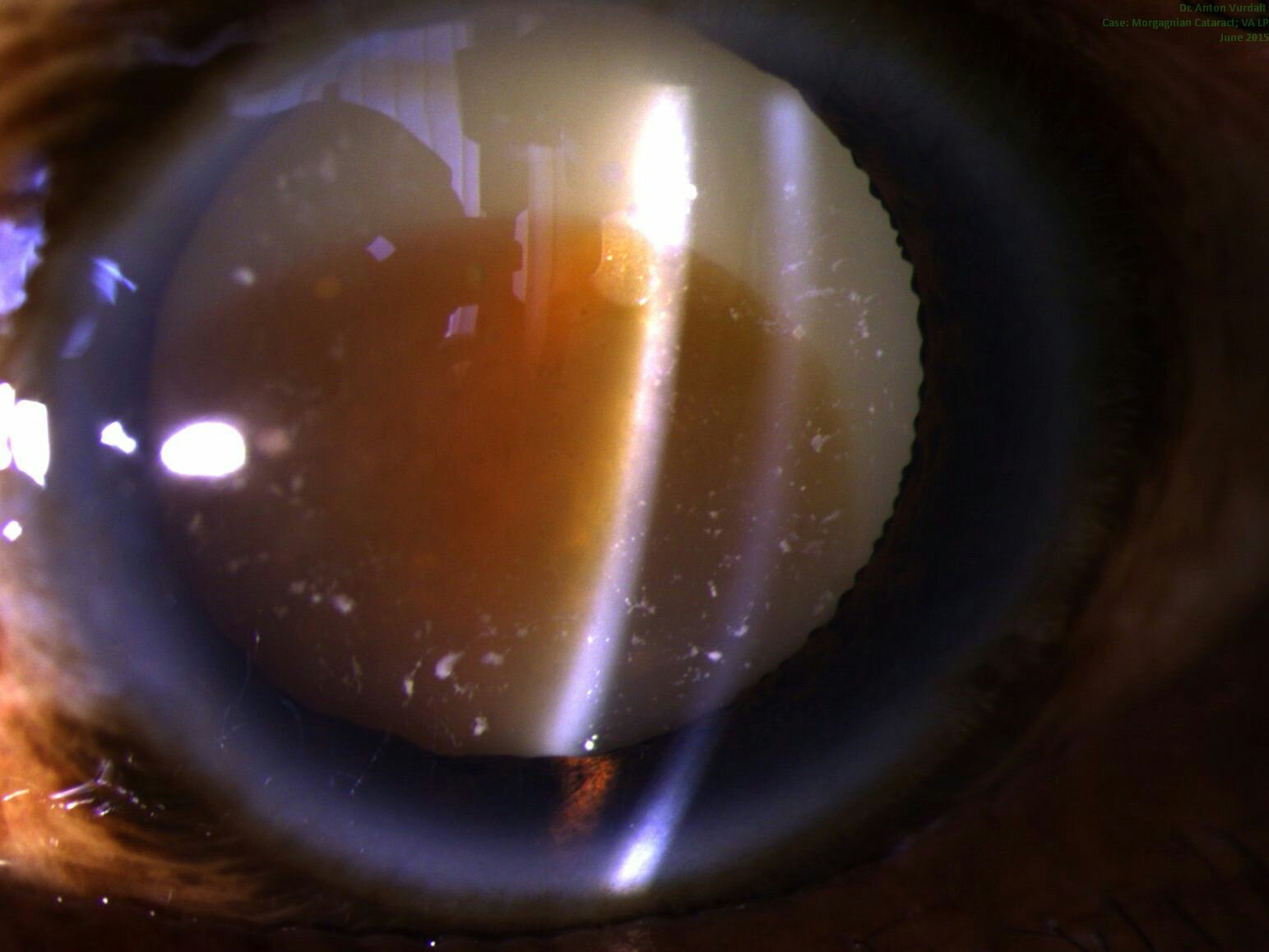
In EnglishEN: A case of June 2015. Classic picture of Morgagnian cataract, i.e. hypermature, white cataract, where cortex is mostly dissolved, and a rigid lens nucleus floats in the milky liquid cortical matter.

These cases are risky because of possible secondary glaucomas (i.e., phacolytic) and because of difficulties with capsulorrhoexis. The latter requires extra caution, initial anterior capsule puncture, cortex suction and bag refill with visco.

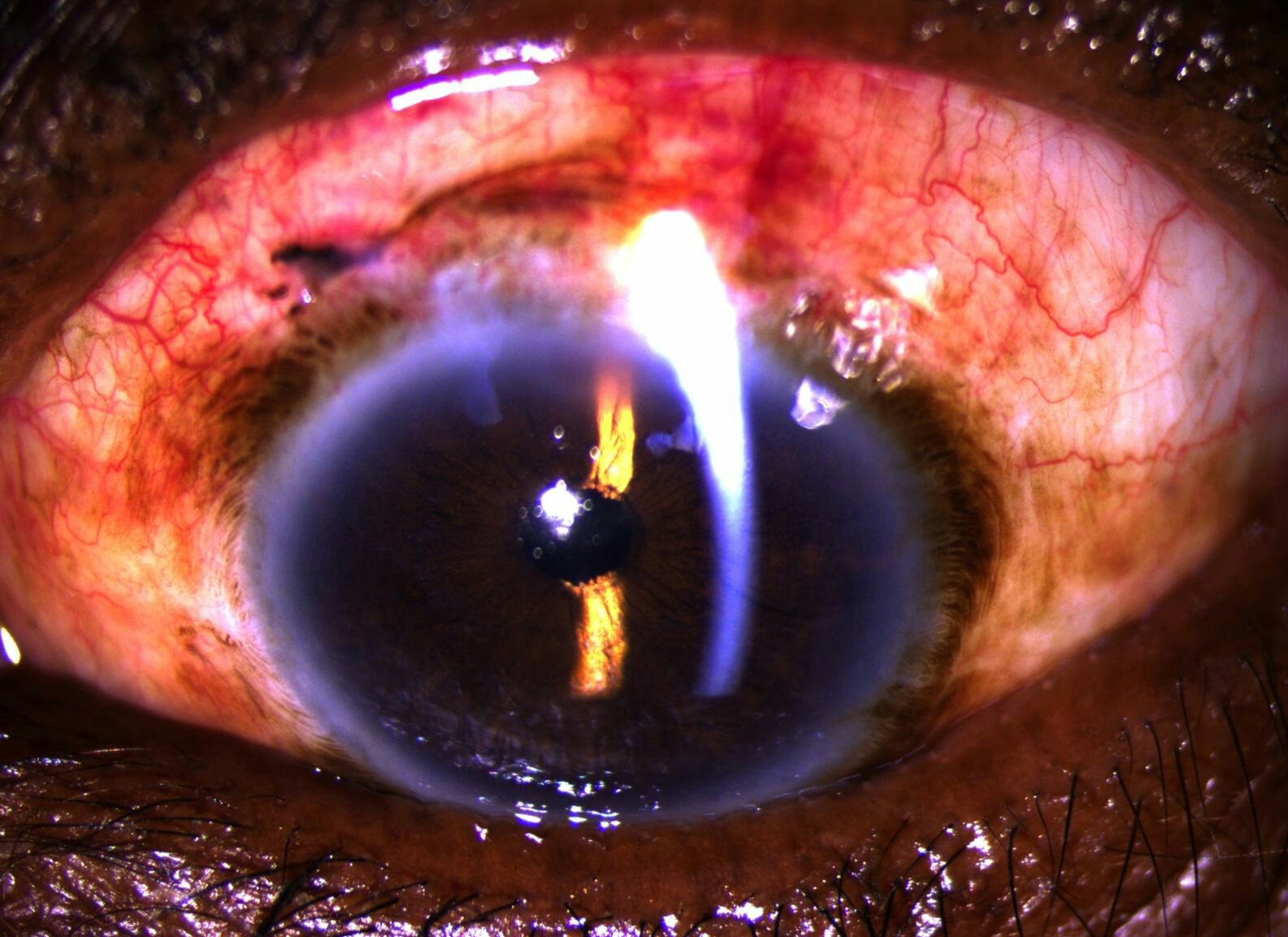
Photos demonstrate pre-op and post-op status.

in Russian / по-русскиRU: Случай июня 2015. Предоперационные и послеоперационные фотографии морганиевой катаракты (перезрелое твёрдое ядро купается в растворённом молочном кортексе). Опасности такой катаракты: возможная факолитическая глаукома, трудности при проведении капсулотомии или капсулорексиса.
Morgagni cataract

Morgagnian hypermature cataract: pre-op status
Morgagni cataract: pre-op status

Morgagnian cataract: pre-op status
Postoperative status: SICS in Morgagni cataract

Postoperative status: SICS in Morgagnian cataract
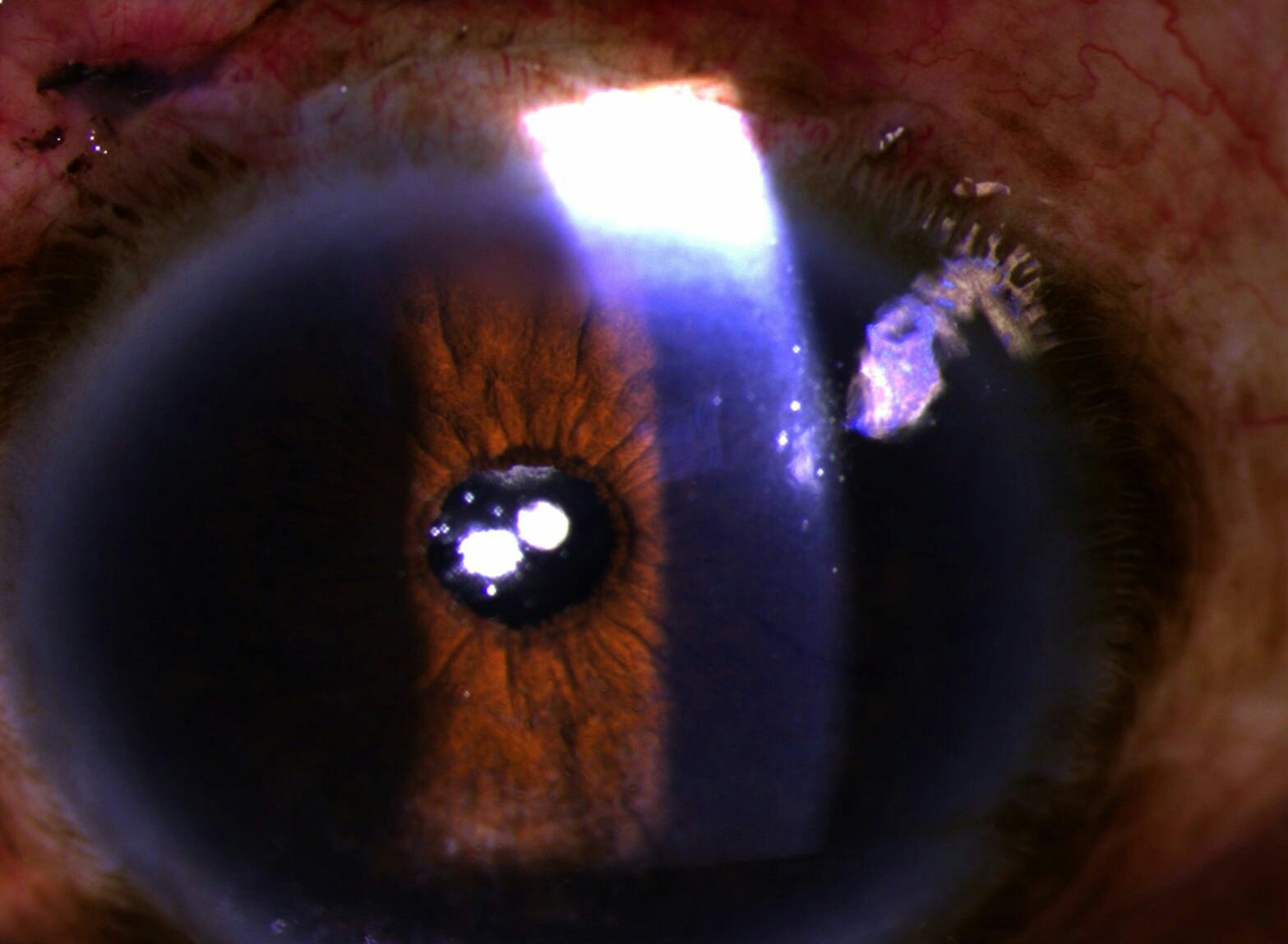
Postoperative status: SICS in Morgagni cataract

Postoperative status: SICS in Morgagnian cataract
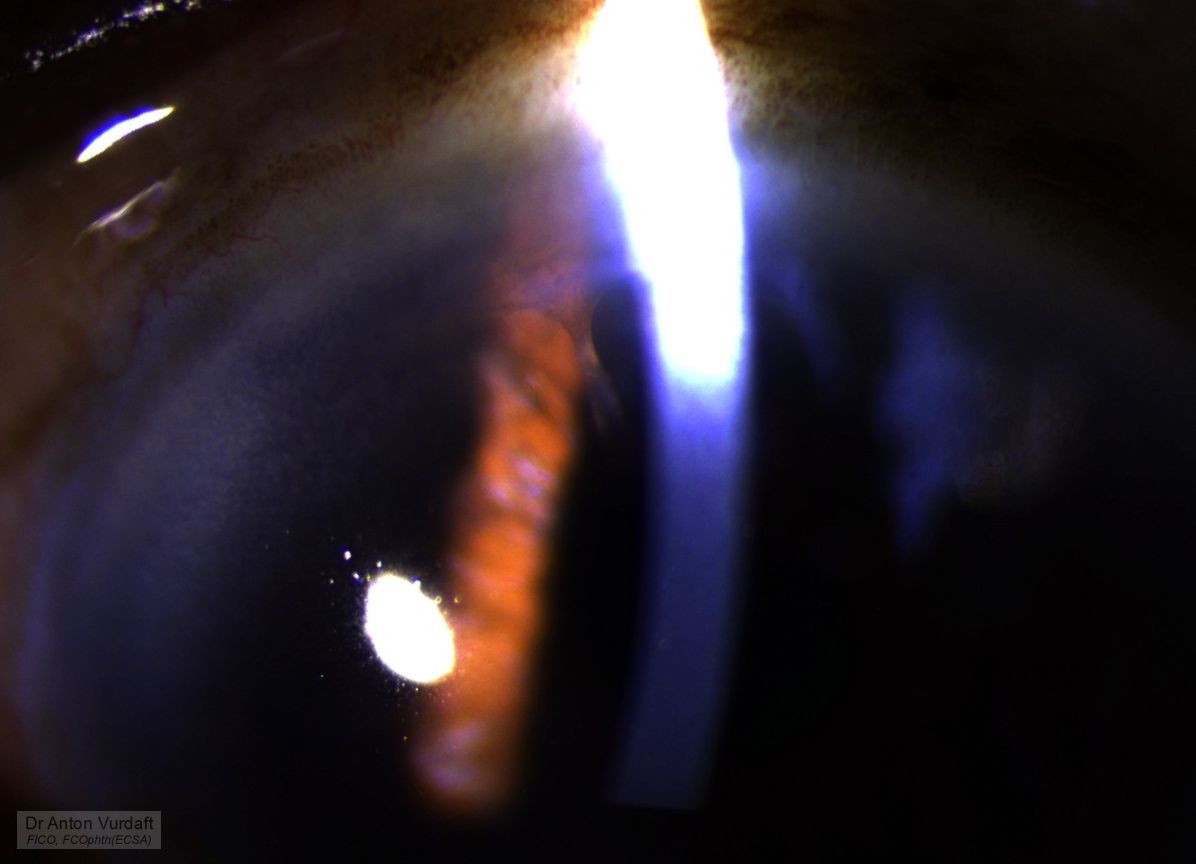
Vitreous wick syndrome after MSICS with posterior capsule tear

In English

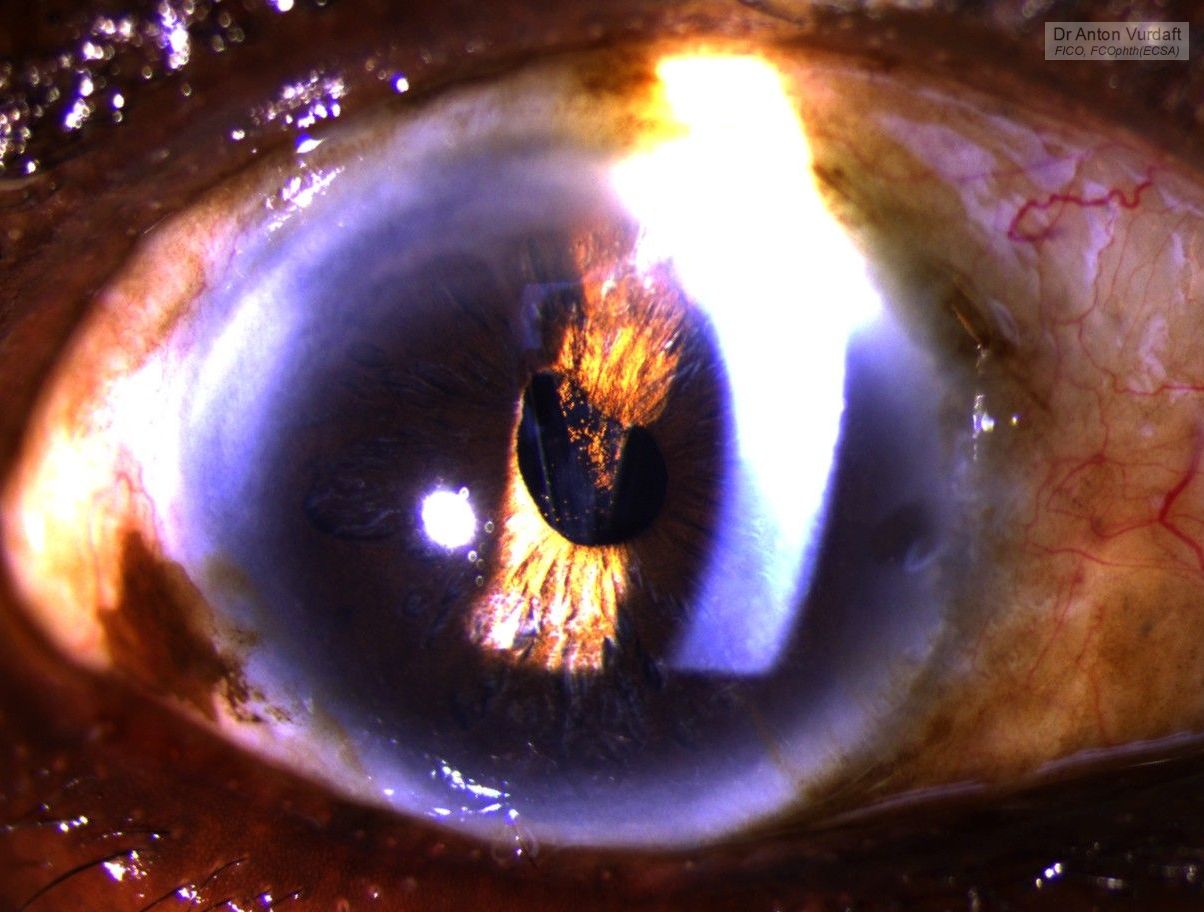
In EnglishCase of February 2016. Vitreous wick encarcerated into the corneal scar after manual small incision cataract surgery. Cataract extraction was performed one year back and not without complications (i.e., with posterior capsule tear, vitreous prolapse and far from ideal mechanical anterior vitrectomy, so called “Vannas-vitrectomy”). Such cases, when fresh, can be resolved with myotics (pilocarpine), but in old cases like this it can only be resolved through surgery or YAG-laser vitreolysis. The latter was performed, pupil restored its shape, vision improved. No signs of retinal tractions were noted.

More on vitreous wick syndrome.

in Russian / по-русскиСлучай от февраля 2016 года.

Слышали про vitreous wick syndrome? Wick в переводе с английского – фитиль, фитилёк. Это случается, когда в ходе операции произошло выпадение стекловидного тела, а витректомия не произведена или произведена недостаточно. “Фитилёк” стекловидного тела ущемляется в тоннеле, парацентезе или любой другой операционной или травматической ране.
Задачей лечения является разрешение этих возможных тракций. Опциями могут быть использование миотиков (при свежих ранах) или хирургическое вмешательство. В данном случае “фитиль” был разбит ИАГ-лазером, что вернуло форму зрачку и улучшило остроту зрения. В анамнезе экстракция катаракты с разрывом задней капсулы один год назад. Мануальная витректомия с ножницами далека от идеала